


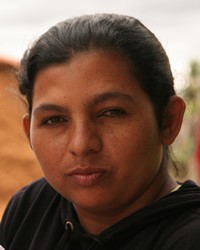

Long before Brazil became a nation, the Romani were already there — not by choice, but by exile. In the second half of the 16th century, Romani men and women were arrested in Portugal under laws that criminalized their very existence, sentenced to prison, and then offered deportation as an alternative. Brazil became their destination, and from that forced beginning they have shaped Brazilian culture in ways that go largely unacknowledged.
The Romani (known in Brazil as ciganos) trace their ultimate origins to northern India, where their ancestors belonged to lower-caste artisan and musician communities. Migrating westward through Persia, Armenia, and the Byzantine Empire, they reached the Iberian Peninsula by the 15th century. Those who arrived in Brazil were mostly from the Iberian Kalé group — the same lineage as the Portuguese ciganos and Spanish gitanos. Additional waves of Romani immigration followed in the 19th and early 20th centuries, bringing Vlax and Sinti subgroups from Eastern and Central Europe, including war refugees and those fleeing the Holocaust. The result is a community with several distinct subcultures: the Calon (descended from Portuguese deportees and the dominant subgroup in Brazil), the Roma (including Kalderash, Matchuaia, and Moldovanos), and a smaller Sinti presence.
Today, Brazil hosts one of the largest Romani populations in the world. Romani communities are spread across hundreds of municipalities, with notable concentrations in the Northeast (particularly Bahia), the interior of Minas Gerais, and the greater São Paulo area. Portuguese is their primary language, though many families preserve Romani dialects — especially Caló and Vlax Romani — in domestic and community settings.
Romani life in Brazil orbits around the extended family and the community camp (acampamento), which remains the social nucleus even as many families have transitioned to permanent housing. Among the Calon, household tents or modest homes cluster together, and decisions of marriage, business, and conflict are handled collectively. Marriages traditionally occur in the mid-to-late teens and are often arranged between families, sometimes between cousins, reinforcing community bonds and keeping resources within the group.
Men typically work as traders — historically in horses, now more often in used cars, tools, or small-scale commerce — and many operate as informal moneylenders, extending credit to farmers and small business owners who cannot access banks. Women manage domestic life, raise children, and commonly practice palm reading and fortune telling, which functions both as income and as a continuation of traditional esoteric knowledge. Both men and women are known as skilled musicians; the Romani contribution to Brazilian musical culture, including the introduction of the six- and seven-string guitar and influence on early samba and carnival traditions, is substantial if rarely credited.
Food, feasting, and celebration are central to Romani identity. Weddings are elaborate, multi-day events that draw extended family from great distances, marked by dancing, music, and communal meals. Women are often recognized by their long, colorful skirts and embroidered dresses, a visible marker of cultural pride. Despite the cheerfulness of these gatherings, daily life for many Romani in Brazil — particularly those still living in camps — is shaped by material hardship, periodic flooding, and the precariousness of life without a fixed address.
Christianity, overwhelmingly Catholic in form, is the professed religion of almost all Brazilian Romani. They identify with the Church and participate in sacramental events such as baptism, marriage, and funerals — the primary occasions that bring them into contact with church institutions. A smaller but growing minority has converted to Pentecostalism, and among these the faith tends to be more personally engaged and transformative.
However, formal Christian profession sits alongside a robust folk spirituality that draws on older Romani traditions. Many Romani hold active beliefs in the power of curses, the evil eye, and the capacity of the dead to influence the living. Sacred significance is attached to fire, rivers, earth, and wind — elemental powers treated as spiritually potent realities, not mere metaphors. Among some Romani communities, the cult of Santa Sara Kali (Sara the Black), the Romani patron saint, represents a devotion that blends Catholic veneration with older spirit-world beliefs in which the ancestors and spirit forces mediate life's outcomes.
Adding a further layer, Romani spirits (cigano spirits) are central figures in the Brazilian Umbanda religious tradition, where mediums invoke them as guides in matters of love, luck, and clairvoyance. Some Romani and their descendants participate in or consult Umbanda practitioners, deepening the syncretism. The result is a faith landscape where Catholic identification is nearly universal but genuine trust in Jesus Christ as Lord and Savior — apart from the spirit world, folk rituals, and supernatural folk remedies — is far less common.
Romani Brazilians who remain in mobile or semi-mobile camps face serious barriers to healthcare and education. Without a stable registered address, families cannot readily access Brazil's public health system, and children face ongoing difficulties enrolling in schools or having their Romani ethnicity officially recognized in government records. Brazilian policy frameworks lack specific provisions for the Romani community, and despite their size, ciganos remain what a United Nations report described as "highly invisible" in official life — absent from the census in any meaningful way and unaddressed by targeted social programs.
Many Romani also need vocational training and economic pathways that complement their entrepreneurial traditions but open doors into the formal economy. Educational attainment remains low across generations, and access to higher education is limited. Where communities are based in flood-prone urban peripheries — as many are in the São Paulo metropolitan area — housing security and disaster preparedness are urgent concerns.
Pray that the evangelical believers already among the Brazilian Romani would grow into confident, Spirit-led disciples who share the true gospel with their own families and communities.
Pray that Romani believers would be raised up and sent out to reach other Romani communities in other places where their diaspora lives without access to the gospel.
Pray for Brazilian churches and Christian workers to overcome longstanding stereotypes and extend genuine hospitality and partnership to Romani communities, building relationships of trust through which the Word can take root.
Pray for practical justice — that Romani families would gain recognition, access to healthcare, stable housing, and educational opportunity in a country where they have lived for nearly five centuries yet still struggle for visibility and rights.
Scripture Prayers for the Romani, Brazilian in Brazil.
https://en.wikipedia.org/wiki/Romani_people_in_Brazil
https://soundsandcolours.com/articles/brazil/gypsy-trance-rituals-in-brazilian-umbanda-religion-34130/
https://www.avcr.cz/en/news-archive/The-Romani-Atlantic-How-do-the-Roma-live-in-Brazil-Angola-and-Cape-Verde/
https://globalvoices.org/2025/09/27/in-brazil-romani-people-living-in-peripheral-areas-fight-for-recognition-of-their-identities/
https://www.migrazine.at/artikel/roma-sinti-and-calo-brazilian-realities-english
| Profile Source: Joshua Project |


